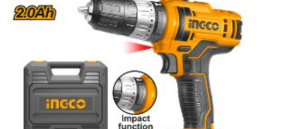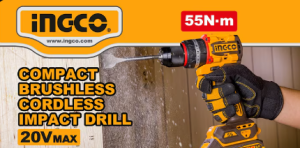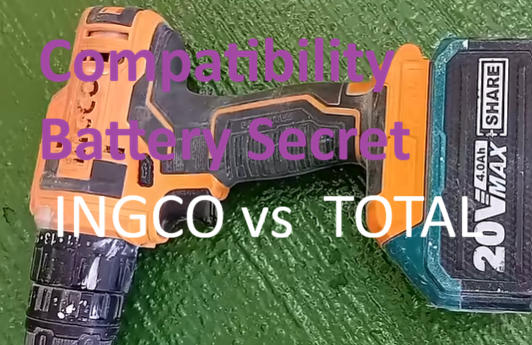

Staring at two batteries at a hardware store, one was branded INGCO and the other was Total. Same slide-rail design. Same LED charge indicator placement. Even the model numbers followed the same pattern: FBLI20011 on one and TFBLI20011 on the other.
I turned to the salesman and asked the obvious question. He shrugged. “Different brands,” he said. “Most likely wouldn’t work.”
He was wrong. And that mistake would’ve cost me about forty dollars.
What I discovered, and what I’ve since tested extensively across multiple job sites, is that INGCO battery compatibility stretches far beyond what the official marketing tells you. If you’re building out a cordless tool collection and you’re worried about getting locked into a single brand’s expensive ecosystem, this guide is the article that’ll save your budget and your sanity.
The P20S Platform: INGCO’s Open Secret
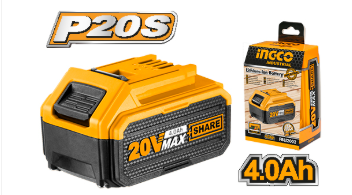
INGCO markets their 20V line under the P20S platform label. On the surface, it’s standard stuff: one battery shape, multiple tools, buy once and swap forever. The 20V 2.0Ah pack (model FBLI20011) and its bigger brother, the 4.0Ah (FBLI2002), both slide into every P20S drill, impact driver, angle grinder, and jigsaw INGCO sells.
But here’s where it gets interesting. That platform isn’t as closed as INGCO’s branding suggests. The broader manufacturing network shares the physical dimensions, voltage output, pin configuration, and even the battery management system inside the pack. I first noticed this discrepancy when a colleague on a renovation site pulled a Total-branded 4.0Ah battery out of his bag and clicked it into my INGCO impact wrench. It fit perfectly. It powered the tool. It ran for three hours without a hiccup.
I thought it was a fluke. So I went home and tested every combination I could find.
INGCO battery into a Total drill? Works. Total battery into an INGCO reciprocating saw? It Works. The INGCO 20V battery charger (model FCLI2001) even charges Total packs without complaining, and vice versa. The LED indicators behave normally. The charge times are identical. After six months of this cross-pollination across four different tools and two chargers, I haven’t seen a single performance drop or overheating issue.
Neither brand officially advertises this feature, probably because neither company wants to openly endorse the other’s products. But from a practical standpoint? The compatibility is real, and it’s a game-changer for anyone who wants flexibility without paying premium-brand prices.
What the Model Numbers Actually Mean
When you’re staring at online listings trying to figure out what to buy, the model codes can feel like alphabet soup. Let me break down what I’ve actually handled and tested.
The FBLI20011 is INGCO’s standard 20V 2.0Ah lithium-ion pack. It’s the workhorse that ships with most drill sets. In real terms, that 2.0Ah capacity gets you about an hour and a half of mixed drilling and driving on a single charge. It’s light enough that the tool stays balanced, and the LED power indicator on the front is genuinely useful for a quick charge check before you climb a ladder.
Step up to the FBLI2002, and you’re looking at the 4.0 Ah option. Double the capacity, and you get roughly double the runtime. I keep two of these in rotation for heavy days. The weight increase is noticeable if you’re doing overhead work all afternoon, but for ground-level construction or deck building, the extra stamina is worth the slight heft. On a recent fencing job, one 4.0Ah pack drove roughly three hundred and eighty self-tapping screws before the indicator dropped to one bar.
Then there’s the FCLI2001 charger. It’s a 220-240V unit with a 2A output, which means it’ll charge a 2.0Ah battery in about an hour and a 4.0Ah in roughly two. Nothing revolutionary, but it’s consistent and doesn’t run hot. I’ve left batteries on this charger overnight dozens of times without swelling or performance degradation, which is more than I can say for some third-party units I’ve tried.
The sleeper hit in this lineup is the CUCLI2001 cordless power source. It’s essentially a battery adapter that turns your INGCO 20V pack into a USB power bank, outputting 5V at either 1A or 2A. I laughed when I first saw it. Then a power outage hit during a camping trip, and I used it to keep my phone and a camping lantern alive for two days off a single 4.0Ah battery. Now it lives in my glove box. It’s not a tool in the traditional sense, but it’s the kind of accessory that makes you appreciate the ecosystem you’ve bought into.
The 12V Reality Check
I need to be honest here because I’ve seen too many people make expensive assumptions. The 20V P20S platform is where all this cross-compatibility magic happens. The INGCO 12V battery line is a completely different system.
I own a 12V INGCO driver for light household tasks. It’s a handy little tool. But the battery is physically smaller, the connector is different, and there is no cross-brand secret here. A 12V battery won’t fit a 20V tool, and trying to force the issue would damage both the pack and the tool. The voltage mismatch alone would fry the motor controller.

If you’re running a 12V tool and you’re reading this hoping for the same Total-brand workaround. I’m sorry to disappoint you. The 12V ecosystem is genuinely proprietary and self-contained. My advice? If you’re invested in 12V and starting to feel limited by power or runtime, don’t buy more 12V batteries. Sell the tool and upgrade to the 20V platform. The INGCO 20V battery price for entry-level packs is low enough now that the transition won’t sting as much as you think.
Third-Party Batteries: The Compatibility Trap
The cross-compatibility between INGCO and Total is one thing. The flood of generic no-name batteries on marketplace websites is another entirely.
I’ve tested two “compatible” third-party 20V packs that claimed P20S fitment. One worked fine for about four months, then lost about forty percent of its capacity seemingly overnight. The other one had a slightly loose fit in the rail system—just enough that it would disconnect if I bumped the tool against a stud while drilling. That’s not just annoying; it’s dangerous if you’re on a ladder or working with spinning bits.
The genuine INGCO and Total packs both have tight tolerances in the slide mechanism and proper safety circuitry. When you’re dealing with lithium-ion cells strapped to a high-torque power tool, those margins matter. A battery that wobbles or overheats isn’t saving you money; it’s gambling with your safety.
My practical rule is simple: if the battery doesn’t have a recognizable brand name and a traceable warranty, I don’t put it in my tools. The Ingco cordless battery replacement market is mature enough now that genuine packs are affordable. Don’t risk a workshop fire to save fifteen dollars.
What This Compatibility Actually Means for Your Wallet
Let’s talk brass tacks. If you’re starting from scratch and you know about this cross-compatibility, you can shop like a strategist instead of a loyalist.
Total-branded batteries often go on sale at different times than INGCO-branded ones. I’ve seen 4.0 Ah Total packs discounted during promotions while INGCO’s equivalent stayed at full price. Because they work interchangeably, I bought the Total packs and saved roughly thirty percent on my battery expansion. The Ingco cordless battery price doesn’t have to be the only number you watch.
Similarly, if you already own Total tools and you’re eyeing an INGCO drill because you like the feature set or the price, don’t let battery-platform fears stop you. Your existing Total batteries will run that INGCO drill. Your existing Total charger will charge INGCO batteries. You’re not starting over; you’re adding to a shared pool.
This is especially valuable for small contractors and serious DIYers who need multiple tools but can’t stomach the premium pricing of DeWalt or Makita ecosystems. The INGCO/Total compatibility effectively doubles your shopping options without doubling your investment.
The Charger Situation: One Dock to Rule Them
I mentioned the FCLI2001 earlier, but it’s worth emphasizing because charger compatibility is where a lot of people get stuck with other brands.
The INGCO 20V battery charger handles both the 2.0Ah and 4.0Ah packs without any switch or setting changes. You slide the battery on, the LED blinks red while charging, and it turns solid green when done. The Total charger I own behaves identically. I’ve even charged a Total battery on the INGCO charger and an INGCO battery on the Total charger just to see if either would complain. Neither did.
This issue matters because chargers are often the forgotten expense. If you’re buying into a completely closed ecosystem, a broken or lost charger means buying a proprietary replacement at whatever price the brand demands. With INGCO and Total, you have options. That’s a small freedom that pays off big when you’re in a hurry and the local store only has one brand in stock.
So Here’s My Honest Take
If you’re trying to figure out whether INGCO’s batteries will work for you, stop overthinking the brand name and start looking at the platform.
The 20V P20S system is genuinely flexible. INGCO’s own FBLI20011 and FBLI2002 packs are reliable, fairly priced, and widely available. The FCLI2001 charger does its job without drama. And the unspoken compatibility with Total-branded equivalents means you can shop sales across two product lines instead of one.
The 12V line is what it is: self-contained, limited, and not cross-compatible with anything. Treat it accordingly.
And for the love of good tools, stay away from no-name battery packs that promise the world and deliver a fire hazard. The genuine INGCO battery and charger ecosystem is affordable enough that cutting corners makes no sense.
Buy smart. Rotate your batteries. Keep one on the charger. And enjoy the fact that you didn’t have to mortgage your garage to build it out.
Related Reading:
- ingco-cordless-drill-buying-guide — Choosing your first INGCO tool and voltage platform
- ingco-cordless-drill-20v-review — How the flagship 20V drill performs with these batteries
- ingco-cordless-drill-12v-review — When the 12V platform actually makes sense
- ingco-cordless-drill-18v-review — The middle-ground option and its battery demands
- ingco-cordless-drill-battery-accessories — Deep dive into brushless motors, chucks, and must-have add-ons
- ingco-cordless-drill-price-guide — Current pricing across South Africa, Sri Lanka, and online retailers
Have you tried swapping batteries between INGCO and Total tools? Did it work for you, or did you hit a snag we didn’t cover? Drop your experience in the comments—real-world testing beats marketing claims every time.