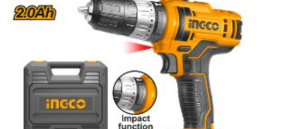
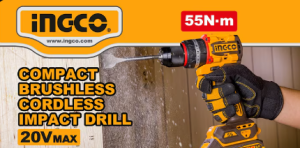
If you’ve been there, you know the truth tool manufacturers don’t put on the box: the INGCO battery and charger combo is more important than the drill itself. You can own the most powerful INGCO cordless battery 20v drill on the market, but if your power source is mismatched, aging, or sitting on a cheap third-party charger that’s cooking the cells, you’ve bought an expensive paperweight.
I’ve spent the last few years working with INGCO’s ecosystem across their 12V and 20V platforms—building decks, renovating kitchens, and helping friends who bought the wrong setup and wondered why their tools felt weak. Here’s what actually matters when you’re shopping for an INGCO cordless battery charger, a replacement pack, or trying to figure out if that bargain battery on Facebook Marketplace is going to destroy your drill.
The P20S Platform: What INGCO Doesn’t Explain Clearly Enough
INGCO calls their 20V system the “P20S platform.” Sounds technical and impressive, right? But here’s what that actually means for you: every INGCO 20V cordless battery in the P20S range uses the same physical connector and voltage output. So if you buy a 20V drill, a 20V impact driver, and a 20V angle grinder, one battery slides into all of them.
That interoperability is genuinely useful. I keep three batteries in rotation, two 4.0 Ah packs and one 2.0 Ah for lighter work, and I can swap them between five different tools without thinking. The INGCO battery compatibility across the P20S line is one of the main reasons I’d recommend committing to the 20V ecosystem if you’re planning to expand your collection. Buy into the platform once, and your batteries become universal currency across your toolbox.
But, and this matters, the P20S is strictly 20V. A 20V battery won’t fit a 12V tool, and a 12V pack won’t even click into a 20V handle. The connectors are physically different, which is actually a good thing because it prevents you from accidentally frying a smaller tool with too much voltage. If you’re running both platforms, you’re running two separate battery economies. That’s not a flaw; it’s just something to budget for honestly.
12V vs. 20V: The Real Difference
Specs sheets love to throw numbers at you. The INGCO 12V battery is lighter. The 20V is more powerful. You already knew that. What the specs don’t tell you is how that translates to frustration or freedom in real life.
I keep a 12V INGCO driver in my kitchen drawer for quick jobs, hanging pictures, tightening cabinet hinges, and assembling a bookshelf. It’s light enough that my partner actually uses it instead of asking me to “just do it with the big drill.” The 12V battery is compact, charges fast, and doesn’t overkill a simple task. But try to build a deck with it, and you’ll feel like you’re bringing a butter knife to a sword fight.
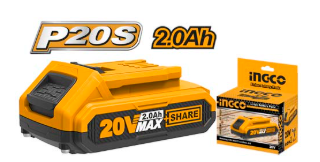
The INGCO cordless battery 20V packs, on the other hand, are where INGCO’s value proposition actually shines. The 4.0Ah option gives you genuine all-day stamina. I tracked my usage last month: one fully charged 4.0Ah battery drove 340 drywall screws on a renovation job before the LED indicator dropped to one bar. That’s not lab-condition fantasy; that’s a real afternoon of work with the trigger pulled more often than not.
My honest take? If you’re buying your first INGCO tool and you can afford the step up, skip the 12V unless you specifically need something for light indoor assembly. The INGCO 20V battery price difference isn’t large enough to justify limiting yourself. You’re not just buying power; you’re buying time. Fewer battery swaps means fewer interruptions, and fewer interruptions means you actually finish projects.
INGCO cordless battery charger
Here’s where I think INGCO’s official line undersells itself. The standard INGCO cordless battery charger that ships with most sets is a solid, no-frills unit. It takes about 60 to 90 minutes to fully charge a 2.0Ah battery and roughly two hours for a 4.0Ah. That’s perfectly fine if you own two batteries and rotate them.
But INGCO also makes a fast charger that cuts that time nearly in half. I didn’t think I needed one until I started working professionally. When you’re on a job site and your only spare battery dies at 10 AM, waiting ninety minutes feels like an eternity. The fast charger isn’t always bundled in the standard sets, which I think is a mistake on INGCO’s part. If you’re buying a bare tool and already have batteries, consider picking up the fast INGCO 20V battery charger separately. It’s one of those upgrades that doesn’t feel essential until you use it once, and then you can’t go back.
One thing I appreciate: the charger has overcharge protection built in. I’ve left batteries on overnight dozens of times, sometimes intentionally, sometimes because I forgot, and I’ve never had a pack overheat or swell. That said, for maximum lifespan, I still pull them off the charger once the green light hits. These are old habits from working with cheaper brands that didn’t have decent circuitry.
Ingco Battery Replacement Time
Lithium-ion batteries don’t last forever. INGCO’s packs are rated for roughly 300 to 500 full charge cycles, which sounds like a lot until you realize that a professional using a drill daily burns through a cycle every day or two. For a homeowner who pulls the trigger on weekends, you’re looking at five to seven years. For a tradesperson, maybe two to three.
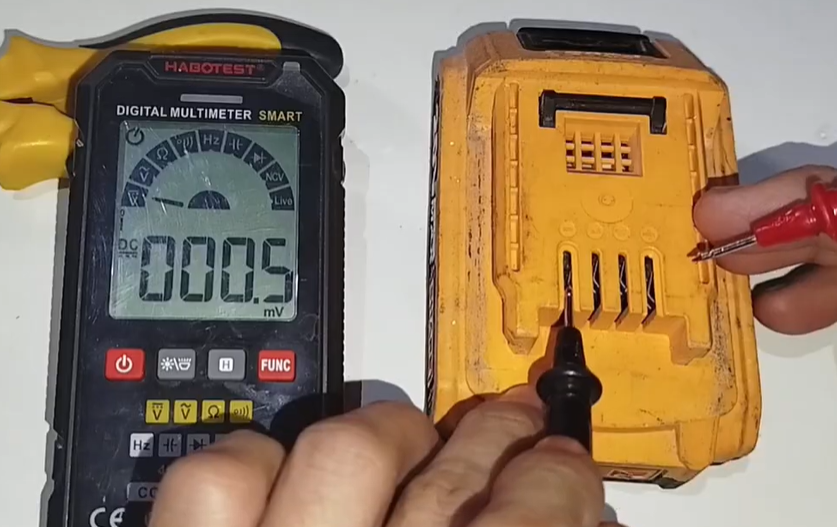
The signs that you need to replace your Ingco cordless battery aren’t subtle. Your drill feels weaker even on a full charge. Runtime drops by a third or more. The pack gets hot during normal use, not just heavy drilling. And sometimes, though INGCO’s quality control is decent, you’ll notice physical swelling around the casing.
This area is where I get opinionated. The market is flooded with third-party INCO cordless battery packs that promise compatibility at half the price. Some of them work fine for light duty. I’ve tested two different generic brands, and one of them performed impressively enough for a few months. The other one wouldn’t hold a charge for more than ten minutes and got worryingly warm while charging. Here’s my practical rule: if you’re using the tool to earn money, buy genuine INGCO batteries. The consistency and safety margins matter. If you’re a weekend warrior on a tight budget, a reputable third-party option might get you through, but treat it as temporary and keep an eye on it.
For genuine Ingco cordless battery replacement, your best bet is authorized dealers or established online retailers. In South Africa, that means checking Builders Warehouse or Makro. In Sri Lanka, Daraz carries them, but verify the seller ratings carefully. Counterfeit power tool batteries are a real problem in some markets, and a fake battery isn’t just a waste of money, it’s a fire hazard sitting inches from your hands.
The Price Reality: What Should You Actually Pay?
Let’s talk numbers because this is where confusion sets in. The Ingco cordless battery price varies wildly depending on capacity, region, and whether you’re buying as part of a set or standalone.
A genuine 20V 2.0Ah battery typically runs between $25 and $40 if you’re buying it separately. The 4.0Ah jumps to around $45 to $65. In South African rand, expect to pay R400 to R600 for the smaller pack and R700 to R1,000 for the larger one. In Sri Lankan rupees, you’re looking at roughly LKR 8,000 to 15,000 depending on capacity and import duties.
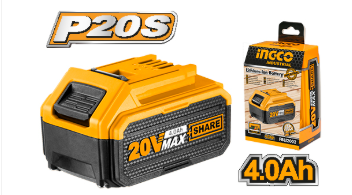
The INGCO 20V battery price is, in my opinion, one of the brand’s biggest competitive advantages. Compare it to DeWalt or Makita, where a single 4.0Ah battery can cost more than an entire INGCO drill-and-battery set, and the value becomes obvious. Yes, the premium brands might offer slightly better cell chemistry or faster charging technology. But for the vast majority of users, INGCO’s pricing hits a sweet spot between “cheap enough to own spares” and “good enough to trust all day.”
My advice? Never buy just one battery. A single battery is a bottleneck. Two batteries is a workflow. Three batteries are freedom. Budget for the ecosystem, not just the tool.
Compatibility: The Myths and the Truth
I am asked about Ingco battery compatibility more than almost anything else. Let me clear up the confusion I’ve seen online.
First, P20S 20V batteries work across all P20S 20V tools. That’s the straightforward part. Second, 12V and 20V are not cross-compatible. The connectors won’t fit, and even if they did physically, the voltage mismatch would damage the tool or the battery. Third, and this is a common mistake, INGCO batteries are not interchangeable with DeWalt, Makita, Bosch, or any other brand. The connectors are proprietary. I’ve seen adapters sold online that claim to bridge brands, and in my experience, they’re unreliable at best and dangerous at worst.
Where compatibility does get interesting is within INGCO’s own older product lines. Some early 18V tools and newer 20V tools share a platform in certain markets, but don’t assume. Always check the model number and the battery connector shape before ordering a replacement. If the pack doesn’t slide in with a confident click, don’t force it.
That Little LED Indicator Saves More Projects Than You Think
One feature I genuinely love about INGCO’s battery packs is the LED charge indicator. It’s a simple row of three or four lights on the battery itself that shows remaining charge at a glance. Before I started using INGCO tools, I was used to drills that just… died. No warning. One minute you’re driving screws; the next you’re staring at a dead tool.
The LED lets you check charge level before you even walk to the job site. I make it a habit to press the test button every morning. If I’m down to one bar, that battery goes on the charger immediately while I grab a fresh one. It sounds like a small thing, but that ten-second check has probably saved me from a dead-battery disaster a dozen times over.
A Quick, Honest Word on Sustainability
INGCO mentions lithium battery recycling on their product pages, and I’ll give them credit: they at least acknowledge it. The reality is that every cordless tool user eventually faces a drawer full of dead batteries that can’t hold a charge anymore. Don’t throw them in household trash. Most hardware retailers in South Africa and authorized dealers in Sri Lanka will accept old lithium-ion packs for recycling, or at least point you toward a proper disposal facility.
It’s not the most exciting part of owning power tools, but it’s part of the responsibility. A dead INGCO battery and charger setup that’s been replaced deserves better than a landfill.
So, What Should You Actually Buy?
If you’re standing in the aisle or staring at an online cart and feeling overwhelmed, here’s my distilled advice from years of actually using these tools.
If you’re just starting out and bought a bare tool because the price was irresistible, get a genuine 20V 2.0Ah battery and the standard charger. It’ll handle most home projects without complaint. If you’re already in the ecosystem and feeling the pinch of downtime, upgrade to a 4.0Ah pack and the fast charger. The combination of longer runtime and shorter charge cycles changes how you work.
For anyone running a 12V tool who’s tempted to jump to 20V, my take is simple: don’t upgrade the battery; upgrade the platform. Sell the 12V set and buy into P20S. The INGCO 12V battery is fine for what it is, but you’ll never get more power out of it than the physics allows.
And what if you’re looking at a suspiciously cheap Ingco cordless battery on a marketplace website that has no reviews? Close the tab. I’ve been burned by that temptation, so you don’t have to. Genuine batteries cost what they cost for a reason; safety circuitry, cell quality, and warranty support matter when you’re strapping a volatile energy source to a spinning power tool.
Related Reading:
- ingco-cordless-drill-buying-guide — Choosing the right voltage and drill for your work
- ingco-cordless-drill-20v-review — How the flagship drill performs with these batteries in real conditions
- ingco-cordless-drill-12v-review — When the smaller platform actually makes sense
- ingco-cordless-drill-18v-review — The middle-ground option and its battery demands
- ingco-cordless-drill-battery-accessories — Deeper dive into brushless motors, chucks, and must-have add-ons
- ingco-cordless-drill-price-guide — Current pricing across South Africa, Sri Lanka, and online retailers
How many batteries do you keep in rotation? Have you ever had a project derailed at the worst possible moment because of a dead pack?
Drop your story in the comments; misery loves company, and it might save another reader from the same headache.